


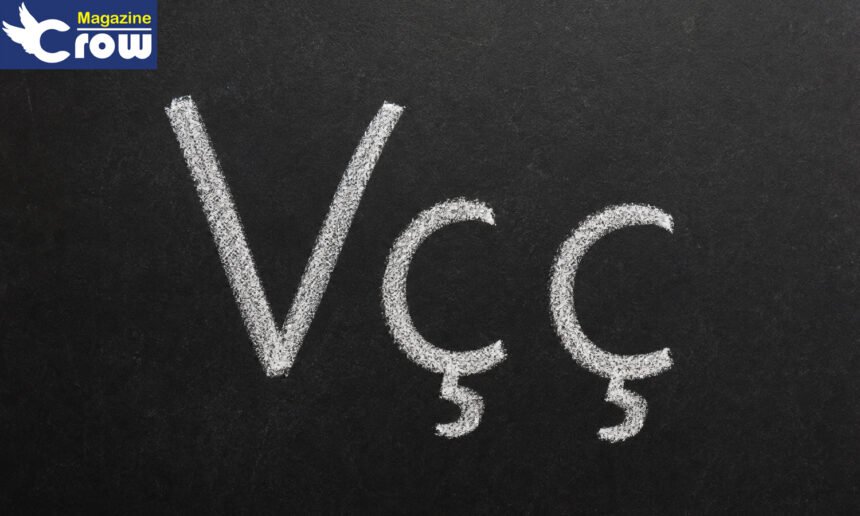
Vçç shows up in social media comments, usernames, and occasionally in technical documents, and it looks unusual enough that people stop and search for it. There are two genuinely different explanations behind the term, one technical and well documented, one informal and impossible to pin down precisely. This article covers both clearly, without inflating either into more than it is.
The Documented Technical Meaning: VCC
In electronics, VCC is a real, well-established abbreviation standing for “Voltage at the Common Collector.” It refers to the positive supply voltage that powers a circuit, particularly the collector terminal in bipolar junction transistor design. Engineers and students encounter VCC constantly in circuit schematics, microcontroller pin diagrams, and integrated circuit documentation, where it marks the positive side of the power supply, paired with GND, or ground, on the negative side. This meaning is standard, taught in electronics courses, and appears in manufacturer datasheets, so there is nothing ambiguous about VCC itself.
The naming convention itself follows a broader pattern used across circuit design. Engineers commonly label supply pins with a letter indicating the type of voltage followed by a repeated letter indicating the specific terminal or node, so VCC pairs with related labels such as VDD, used for the drain terminal in field-effect transistor designs, and VSS, used for the source terminal, functioning similarly to ground. Someone reading circuit diagrams regularly will encounter this entire family of related abbreviations, and VCC specifically remains one of the most frequently seen labels because bipolar junction transistors have been a foundational building block of analog and digital electronics for decades.
The “Vçç” spelling, with the cedilla character replacing the letter C, most plausibly arises from a text encoding or font rendering error. When text is copied from PDFs, older documents, or systems using different character encodings, letters can be misrendered, and “CC” turning into “çç” is the kind of glitch that happens when a document or platform does not correctly interpret certain character sets. Seen in a technical context, “Vçç” is best read simply as a garbled version of VCC rather than a separate term with its own meaning.
This kind of encoding mismatch is a well-documented category of problem in digital typography. Character encoding standards define how a sequence of bytes maps to displayed characters, and when a document created under one encoding standard is opened or converted using a different one, certain characters can shift to entirely different symbols that happen to occupy a similar position in the underlying character table. The specific transformation from a plain “C” to a cedilla “ç” is consistent with known issues in legacy encodings and font substitution errors, particularly when documents move between systems configured for different regional language settings, such as English-language systems and those configured for French, Portuguese, or Turkish, all of which use the cedilla character natively.
The Informal Meaning: Internet Slang With No Fixed Definition
Outside technical documents, “vçç” also circulates as informal internet slang, mostly in comment sections, usernames, gaming chats, and memes. In this context, it does not have one agreed meaning. People use it to express surprise, excitement, humor, or confusion, in roughly the same role as expressions like “omg,” “lol,” or a stretched-out “whaaat.” Its appeal in this setting comes from its unusual look, since the cedilla character ç is uncommon in English and stands out visually in a feed full of ordinary text.
It is worth being direct about the limits of this explanation. There is no single, documented origin story for this slang use, no confirmed first appearance, and no authoritative source defining exactly what it is supposed to convey. Different communities and individual users appear to have adopted the character combination independently, largely because it looks distinctive, and its meaning in any given post depends entirely on context and tone rather than a shared, fixed definition.
Two broad theories attempt to explain how this slang usage began, and neither has strong supporting evidence over the other. The first treats it as accidental: someone using a keyboard layout configured for French, Portuguese, or Turkish, where the ç character sits in an easily accessible position, might type it without noticing, especially while typing quickly on a mobile device, and other users then picked up and repeated the unusual spelling because it looked interesting. The second treats it as deliberate stylization: internet users regularly modify ordinary words and expressions with unusual characters specifically to make a post or username stand out, in the same spirit as substituting numbers for letters or adding extra vowels for emphasis, and “vçç” may simply be one more example of that broader habit rather than a mistake at all. Given the available evidence, it is reasonable to conclude that both explanations likely apply in different cases, with some instances of “vçç” originating from genuine keyboard or encoding quirks and others from intentional stylistic choices, and it is generally impossible to tell which applies to any single specific use without additional context from the person who typed it.
Why the Two Meanings Get Mixed Together
Because “Vçç” and “VCC” look almost identical, content written about one often gets tangled up with the other. Someone searching after seeing the term in a casual online post may land on an article explaining bipolar junction transistors, and someone searching after seeing it in a datasheet may land on an article calling it Gen Z slang. Neither explanation is wrong on its own; the confusion comes from treating them as a single term with one meaning, when they are really two separate, unrelated things that happen to look alike.
This overlap is compounded by search engines themselves, which often cannot distinguish between the technical query and the casual one, since both use nearly identical text. A search algorithm sees “vcc” or “vçç” and returns a mixture of electronics resources and slang explainers side by side, without any reliable way to know which one the searcher actually wanted. Publishers writing about the term have, in turn, sometimes blended both explanations into a single article covering circuit diagrams and meme culture together, which can make the distinction feel more connected than it actually is. In reality, the electronics meaning and the internet slang usage share no historical or causal relationship beyond the coincidental visual similarity between the letters C and ç.
How to Tell Which Meaning Applies
The surrounding context almost always makes the intended meaning obvious.
- If you see “Vçç” in a circuit diagram, a datasheet, a schematic, or any electronics-related document, it almost certainly refers to VCC, the positive supply voltage, and the ç is a rendering artifact rather than an intentional character.
- If you see “vçç” in a comment section, a caption, a username, or a meme, it is being used informally, and its meaning depends on tone and context rather than any fixed rule.
- If professional or academic clarity matters, use “VCC” with a standard C rather than the cedilla version in either case, since “Vçç” is not itself a recognized technical or dictionary term.
- Consider the surrounding punctuation and formatting. Technical documents typically present it within a labeled diagram, a table of pin assignments, or alongside a numeric voltage value, while slang usage typically appears as a standalone reaction, sometimes repeated or paired with emoji, punctuation, or capital letters for emphasis.
- If the platform or document was generated or converted from another format, particularly older systems, scanned documents, or non-English keyboard layouts, an encoding error is the more likely explanation regardless of the surrounding context.
Why VCC Specifically Is Prone to This Kind of Confusion
Not every technical abbreviation ends up with a viral slang doppelganger, and it is worth understanding why VCC in particular became susceptible to this. Its short length, just three characters, and its double-letter ending make it visually similar to a wide range of possible encoding substitutions. A longer or more distinctive abbreviation would be less likely to accidentally resemble a stylized slang term after a rendering error. Combined with VCC’s extremely high frequency of appearance across circuit diagrams, textbooks, and hobbyist electronics forums, there was simply more raw material available for an encoding glitch to occur and then get noticed, screenshotted, and shared, compared to a rarer or more obscure technical term.
A Note on Testing and Placeholder Uses
A smaller, more specialized use of “vçç” also appears in some software development and testing contexts, where developers sometimes intentionally choose unusual, rare character strings as placeholder or test values specifically because they are unlikely to collide with real data already present in a system. Because “vçç” is uncommon in typical English-language data and includes a special character, it can serve this narrow technical purpose in some testing workflows, helping developers verify that a system correctly handles non-standard characters and encoding edge cases. This use is unrelated to both the VCC electronics meaning and the casual internet slang meaning, and it further illustrates how a short, unusual character string can accumulate multiple, entirely separate practical uses across different fields without any of them representing a single, unified “true meaning” of the term.
What This Reveals About How Search-Driven Content Gets Written
The spread of confident-sounding explainer articles about “vçç” mirrors a pattern seen with other short, unusual character strings that briefly attract search attention. A visually distinctive combination of letters gets noticed by a handful of internet users, generates a small but real spike in search queries from people who are simply curious, and publishers respond by producing detailed explainer content, sometimes genuinely researched, sometimes largely speculative, to capture that search traffic. Because the underlying term genuinely has no single fixed meaning in its casual usage, articles covering it tend to hedge less than the evidence actually supports, presenting confident theories about origin and usage that go beyond what can actually be verified.
This is a useful pattern to recognize broadly, not just for “vçç” specifically. Short, visually unusual strings of characters are particularly susceptible to this kind of content proliferation, precisely because they are easy to notice, easy to search, and inherently difficult to pin down to one confirmed meaning, which leaves plenty of room for interpretation to fill the gap left by genuine uncertainty.
Practical Takeaway
For most readers, the practical answer is fairly simple. If the term shows up anywhere near electronics, transistors, circuits, or voltage, read it as VCC and move on with confidence, since that meaning is well documented and unambiguous. If it shows up in a casual social media context, treat it the same way you would treat any other flexible slang expression or reaction, interpreting it from tone and context rather than searching for a hidden, fixed definition that does not actually exist. Trying to find one universal, authoritative meaning that covers both situations is the wrong approach, since the term genuinely functions as two unrelated things that happen to share the same letters.
Conclusion
“Vçç” is not a standalone word with one true meaning. In technical writing, it is almost always a garbled rendering of the well-established term VCC, meaning the positive supply voltage in a circuit. In casual online use, it functions as flexible internet slang with no fixed definition, shaped by whoever is typing it and where. Reading it correctly is mostly a matter of noticing which of these two very different contexts you are actually in.
Discover a world beyond the expected with Crow Magazine