


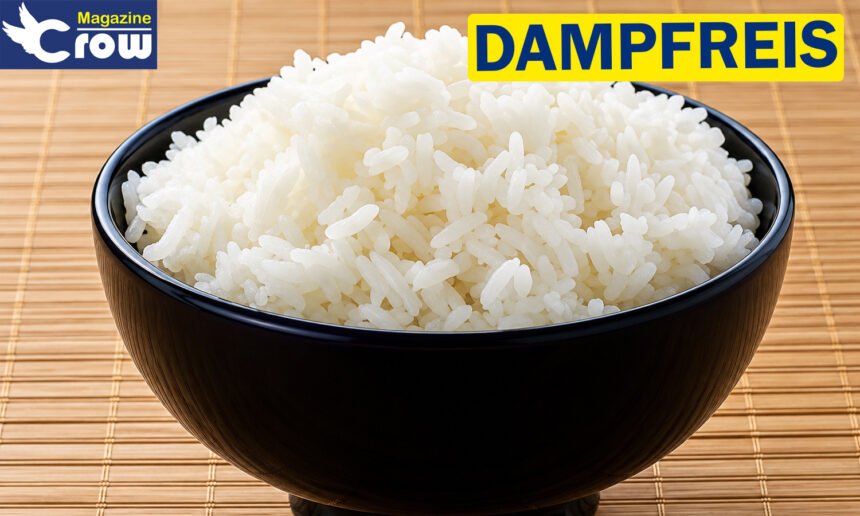
Dampfreis is a German compound word that combines “Dampf” (steam) and “Reis” (rice), and it simply means rice cooked with steam instead of being boiled in a large volume of water. It describes a cooking method, not a specific rice variety or branded product, so any type of rice, from long-grain white to basmati or jasmine, can be prepared as Dampfreis, and the term shows up both in home cooking and on grocery packaging in German-speaking countries.
What Does Dampfreis Mean?
Dampfreis refers to rice cooked by absorption: a measured amount of water is brought to a simmer, the rice is added, and the pot is covered so the rice finishes cooking in its own steam once the water has been absorbed. This is different from boiling rice in an excess of water and then draining it once the grains are tender, which is the more common method taught in many English-language recipes.
In German-speaking households and cookbooks, the term also appears on packaging for parboiled or pre-steamed rice, where the grain has been steam-treated during processing before it ever reaches the pot. Both uses point to the same core idea: steam, rather than aggressive boiling, does the cooking, and the rice is never sitting in a pool of water that later gets poured down the drain. This dual usage, home-cooked and factory-processed, is why you may see the word applied slightly differently depending on whether you are reading a recipe or a product label.
How Is Dampfreis Different From Boiled Rice?
The main difference between Dampfreis and conventionally boiled rice comes down to water management. Boiled rice sits in a large volume of water that is later drained, which can wash away some water-soluble nutrients and flavor compounds along with the starch. Dampfreis uses only as much water as the rice will fully absorb during cooking, so nothing is poured off at the end.
That difference in method shows up clearly in texture. Rice cooked by steam absorption tends to hold its shape as distinct, separate grains rather than clumping together, which is why the technique works well in stir-fries, rice bowls, and dishes where you do not want the rice to turn mushy. Boiled-and-drained rice can also produce good results, but it is more sensitive to timing; a minute or two of overcooking can leave the grains soft and starchy in a way that steamed rice generally resists.
What Types of Rice Work Best for Dampfreis?
Long-grain white rice, basmati, and jasmine rice are all well suited to the steam-absorption method because their lower starch content helps the grains stay separate after cooking. These varieties tend to produce the light, fluffy texture people usually associate with Dampfreis, and they are widely available, so they are a reasonable starting point if you are trying the method for the first time.
Medium-grain and short-grain rice can also be prepared as Dampfreis, though the higher starch content in these varieties means the finished texture will be slightly stickier. This is not a flaw; it simply means the technique adapts to the rice you are using rather than forcing every variety into the same result. Brown rice can be steamed using the same principle, but it generally needs a longer cooking time and a bit more water because the bran layer slows down water absorption.
How Do You Make Dampfreis at Home?
Making Dampfreis at home does not require special equipment beyond a pot with a tight-fitting lid. Start by rinsing the rice under cold water until the water runs mostly clear, which removes surface starch that would otherwise make the finished rice gummy. Combine the rinsed rice with the correct water-to-rice ratio for the variety you are using, bring it to a simmer over medium heat, then cover the pot tightly and reduce the heat to low.
Resist the urge to lift the lid while the rice cooks, since releasing the trapped steam interrupts the process and can lead to unevenly cooked grains. Once the visible water has been fully absorbed, which you can check by briefly tilting the pot, remove it from the heat but keep the lid on. Let the rice rest, covered, for five to ten minutes so any remaining steam can finish softening the grains evenly. A final fluff with a fork separates the grains and releases excess steam before serving.
What Water-to-Rice Ratio Should You Use?
The right ratio depends on the type of rice, since different grains absorb different amounts of water. Long-grain white rice typically uses roughly one and a half to two parts water for every one part rice, while basmati and jasmine rice often need slightly less water because of their lower starch content and thinner grain.
Brown rice generally requires more water and a longer cooking time because the intact bran layer slows moisture absorption. Because manufacturers and regional cooking traditions vary slightly in their recommended ratios, checking the guidance on your specific bag of rice is a reliable way to fine-tune the amount of water for consistent results, especially the first few times you try a new variety.
Can You Make Dampfreis Without a Stovetop Pot?
Yes. The same steam-absorption principle applies whether you use a stovetop pot, an electric rice cooker, or a stackable steamer basket set over simmering water. Electric rice cookers are built specifically around this method: they measure the cooking process by temperature rather than time, automatically switching to a “keep warm” setting once the water has been absorbed and the internal temperature rises.
A steamer basket offers a slightly different variation, where the rice is placed above simmering water rather than directly in it, allowing steam to circulate around the grains rather than being absorbed from below. This approach is common in parts of Asia and can produce a firmer, more separated texture, which some cooks prefer for dishes like fried rice that benefit from drier, less sticky grains.
Is Dampfreis Healthier Than Boiled Rice?
Because no cooking water is drained away in the Dampfreis method, more of the rice’s water-soluble nutrients and natural flavor stay in the finished dish rather than being poured out with the excess liquid. This does not make Dampfreis a fundamentally different food from boiled rice nutritionally, since the underlying grain is the same; it simply changes how much of what the grain naturally contains ends up on your plate.
The bigger nutritional factors are still the type of rice you choose and the portion size, not the cooking method alone. White rice, brown rice, and other varieties differ meaningfully in fiber and nutrient content regardless of whether they are steamed or boiled, so choosing a whole-grain variety will affect your meal more than switching cooking techniques will.
How Do You Use Dampfreis in Cooking?
Dampfreis works well as a side dish alongside curries, stews, and braised meats, where its separate, fluffy grains soak up sauce without turning mushy. Its dry, distinct texture also makes it a strong base for fried rice, since day-old Dampfreis that has been refrigerated tends to fry up better than freshly boiled rice, which often holds too much surface moisture.
It also holds up well in rice bowls, salads, and stuffed vegetable dishes, where you want the grains to stay separate rather than clump into a sticky mass. Because the method itself is flexible across rice varieties, you can pair Dampfreis with almost any cuisine’s flavor profile, from a simple German side dish to Middle Eastern pilafs to Asian stir-fries, without changing the underlying cooking technique.
What Mistakes Should You Avoid When Making Dampfreis?
The most common mistake is using too much or too little water, which throws off the entire absorption process. Too much water leaves the rice soggy even after resting, while too little water can leave the bottom layer scorched before the top grains finish cooking. Measuring carefully, rather than estimating by eye, solves most of these problems.
Lifting the lid during cooking is another frequent misstep, since it lets steam escape and disrupts the even heat distribution the method depends on. Skipping the resting period at the end is a smaller but still noticeable mistake; rice that goes straight from the stove to the plate without a few minutes to rest often turns out slightly wetter and less evenly cooked than rice that was allowed to finish steaming off the heat.
How Does Dampfreis Fit Into German Cuisine?
In German-speaking countries, steamed rice appears less often as a standalone dish and more as a supporting component of the meal, served alongside dishes like goulash, chicken fricassee, or vegetable stews where a neutral, absorbent base is useful. Grocery stores in Germany, Austria, and Switzerland commonly stock pre-steamed rice specifically labeled as Dampfreis, positioned as a convenient, quick-cooking option compared to raw, unprocessed rice.
This retail use of the term reflects a broader pattern in German food culture, where cooking techniques are often named plainly and directly rather than given a separate brand identity. Just as “Kochschinken” literally describes cooked ham and “Rohmilch” literally describes raw milk, Dampfreis literally describes rice cooked with steam, and the plainness of the name is part of why it functions equally well as a home cooking instruction and as a product label.
Conclusion
Dampfreis is a straightforward idea once you strip away the cooking method’s German name: rice that finishes cooking in its own trapped steam rather than boiling in a pot of water that later gets drained away. The technique works across nearly every rice variety, requires no special equipment beyond a pot with a tight lid, and tends to reward the cook with fluffier, more separated grains that hold up well in everything from a simple side dish to fried rice the next day. Once you get the water ratio right for the rice you are using, Dampfreis becomes less a special technique and more just how you cook rice.
Frequently Asked Questions
Is Dampfreis a type of rice?
No. Dampfreis describes a cooking method, not a rice variety. Any rice, including long-grain, basmati, or jasmine, can be prepared as Dampfreis by cooking it through steam absorption rather than boiling it in excess water.
Is Dampfreis the same as parboiled rice?
Not exactly. Parboiled rice is partially steam-processed at the factory before packaging, while home-cooked Dampfreis refers to the steaming that happens in your own pot. Some packaged rice labeled Dampfreis has simply been pre-steamed during production before it reaches store shelves.
Why does Dampfreis taste different from boiled rice?
Because no cooking water is drained away, Dampfreis retains more of its natural flavor and some water-soluble nutrients. Boiling in a large volume of water, followed by draining, can carry some of that flavor and nutrition away with the discarded water.
Can you make Dampfreis in a rice cooker?
Yes. Rice cookers are built around the same steam-absorption principle as stovetop Dampfreis. They measure the cooking process by temperature, automatically switching to a warming setting once the water has been fully absorbed by the rice.
Does Dampfreis take longer to cook than boiled rice?
Cooking time is generally similar for white rice varieties, usually 15 to 20 minutes plus a short resting period. Brown rice takes longer regardless of the method used, since its bran layer slows water absorption whether the rice is steamed or boiled.